
I deplore the scammers in my industry. That said, I understand why my industry attracts them.
Not all, but a sizable contingent of those looking for ghostwriting services are coming from a place of vulnerability. Some are abuse survivors. Others are elderly, or dying. Some are persecuted or broken-hearted and feel that having their story enshrined in a book will provide a sense of closure… or in some cases, revenge.
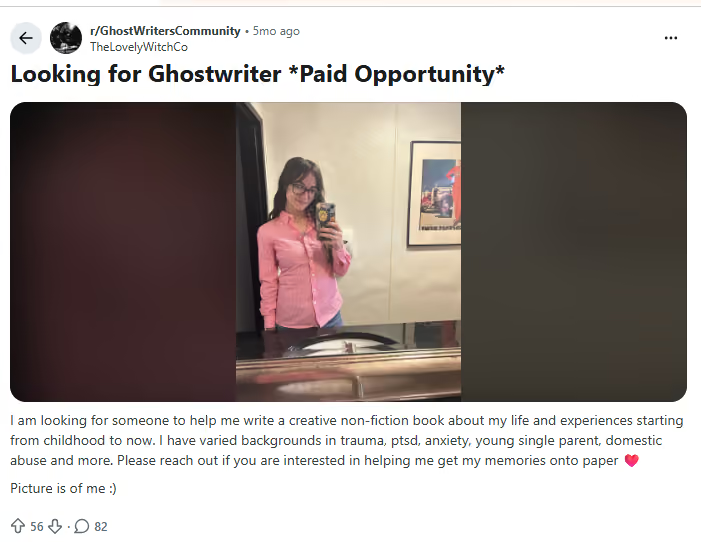
And then there are those who genuinely believe their story makes them destined for fame and fortune. These folks are susceptible to ridiculous promises, and there are plenty of crooks out there willing to make them.
According to one market research estimate, clients paid ghostwriters $1.42 billion in 2025 and that number is expected to climb at a compound annual growth rate of 7.8% through 2032.1 It’s not the largest marketplace in the world, but when over a billion dollars are being spent and a lot of vulnerable, desperate, and dreamy-eyed people are doing the spending, scammers take notice.
What is a Ghostwriting Scam?
Ghostwriting scams often resemble “pig butchering scams,” in which some measure of trust is cultivated, then aggressively exploited.
A ghostwriting client may pay a scam company as little as $2,000 to get started on a manuscript, a mere fraction of what would be charged by a reputable ghostwriter. What follows is a series of delays, subpar deliverables, and upsells.
The scammer may disappear for several weeks, and then resurface, not with any meaningful deliverables, but to tell you that your book idea has attracted the interest of a major movie studio and they need a screenplay. They need it quick and it’s only going to cost you an additional $4,000. They’ll tell you that they’re on the cusp of getting your book into a thousand Barnes & Noble bookstores, but to do so they’ll need to set up a hardcover print run and that’s going to be another eleven grand. They’ll guarantee that a specific marketing plan will result in guaranteed book sales on Amazon that will recover 7x your investment, but it’s going to cost a lot more than you initially planned to pay.
A little later on in this post I’ll share a conversation I had with one such scammer where he promised me $400 a week in book sales before he even knew what my book was about.
In this post, I’ll be naming a lot of names. I’m comfortable doing this, because the names are not the point. The names, as you’ll soon see, are always in flux as scam companies pull the plug on played-out brands and web properties and promptly launch new ones. The anatomy and telltale signs of the ghostwriting scam, however, are quite uniform. That’s the only good news I’m afraid.
The point of this post is to familiarize readers with these recurring, easily identifiable features of ghostwriting scams. I’m going to show you how they operate, proliferate, and communicate, and I have no interest in pulling any punches or protecting any “brands” as I seek to accomplish this objective.
I’ll also provide several simple tactics for vetting ghostwriters. What I want in the end is for you to have the knowledge and tools necessary to evade the swarms of predators that feed and feast in this marketplace. With so much great talent out there, you should expect nothing less than to connect with a service provider who will properly honor your business and your story.
How to Sniff Out a Scam Like a Pro
Almost any ghostwriting search on Google will surface one or more scam sites. They dominate the Google Ads space. But legitimate ghostwriting companies advertise on Google Ads as well. So how do you know which services are legit and which to avoid?
Let’s start with the easiest-to-spot red flags. Here are my top three:
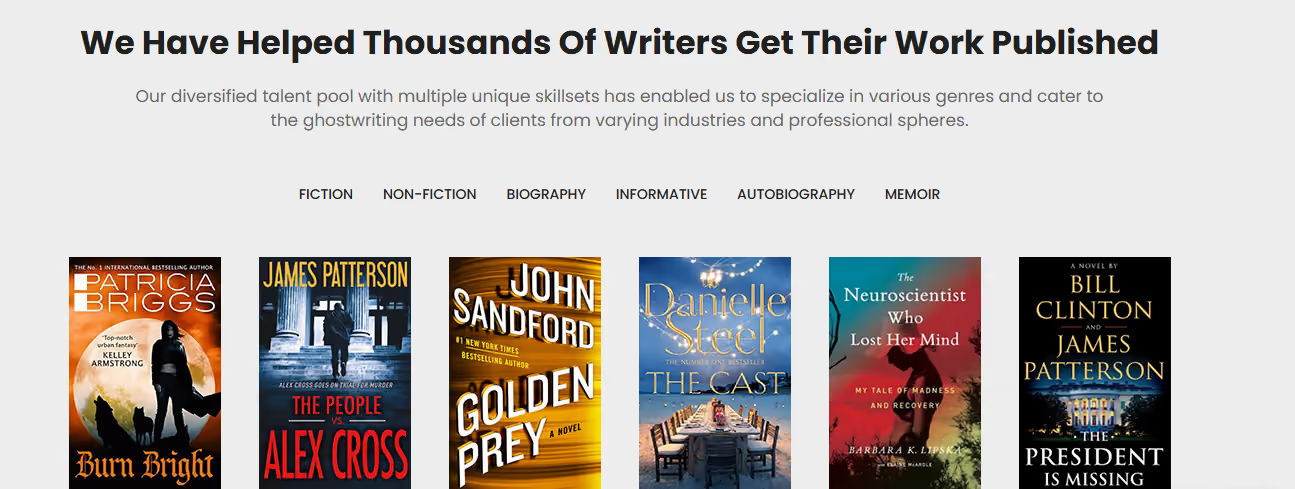
Red Flag #1 – The books featured are likely unaffiliated with the ghostwriting service.
Trust your gut here. Some of the more brazen scam operations will go so far as to feature A-list author names, like James Patterson, J.K. Rowling, Danielle Steel, Michelle Obama, and even the late Dr. Seuss.
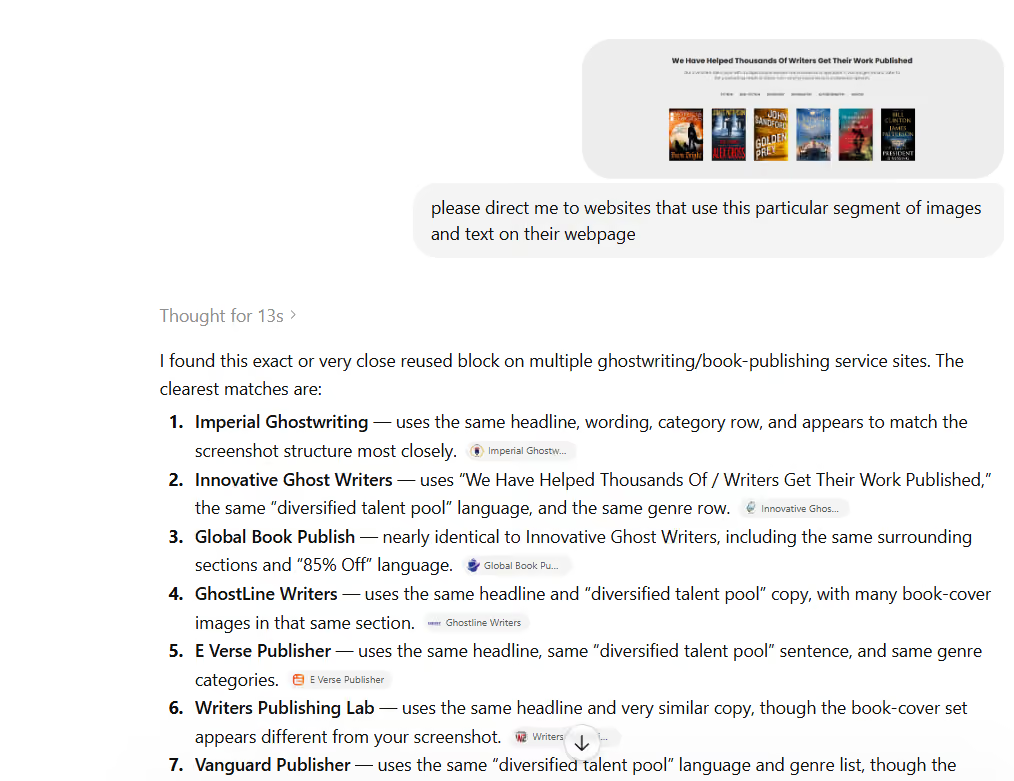
Now this is where you’ll see how the game is played: I asked ChatGPT to locate similar usages of images and copy across the web.
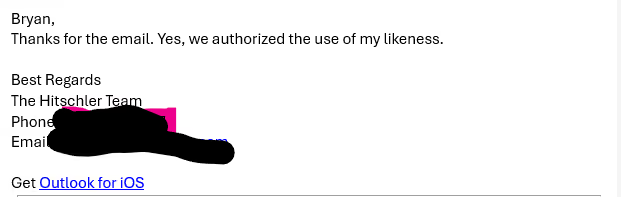
Other scammers shy away from featuring A-list titles on their sites but may instead feature works by lesser-known authors. This is where it can be difficult to pick out the scammers from legitimate businesses. When in doubt, track down the personal websites of the authors featured and inquire about their relationship to a given ghostwriting company. If an author is featured on a ghostwriter’s web page, then that author should have consented to the use of their work, name, and/or likeness:
Red Flag #2 – Coupons or promos advertise significant discounts (70%, 80%, 90% off).
I’m putting this one at #2, because it’s so easy to spot and can help you efficiently filter out scams. For some reason this particular coupon offer is synonymous with scammers. Legitimate ghostwriters are unlikely to lead with such vague offers, because we know that customers often enter the discussion without much knowledge of actual pricing for ghostwriting services. The advertising of “deep discounts” doesn’t signify much other than pressure to act fast before the offer expires.


Red Flag #3 – Old-Fashioned Sloppiness of Presentation, Especially Written Presentation
Scammers are scammers, not writers, and they have little regard for the written word. Even in the age of AI, some scam sites are thrown together so hastily that bits of clumsy, misplaced, and downright nonsensical web copy show up on their site.
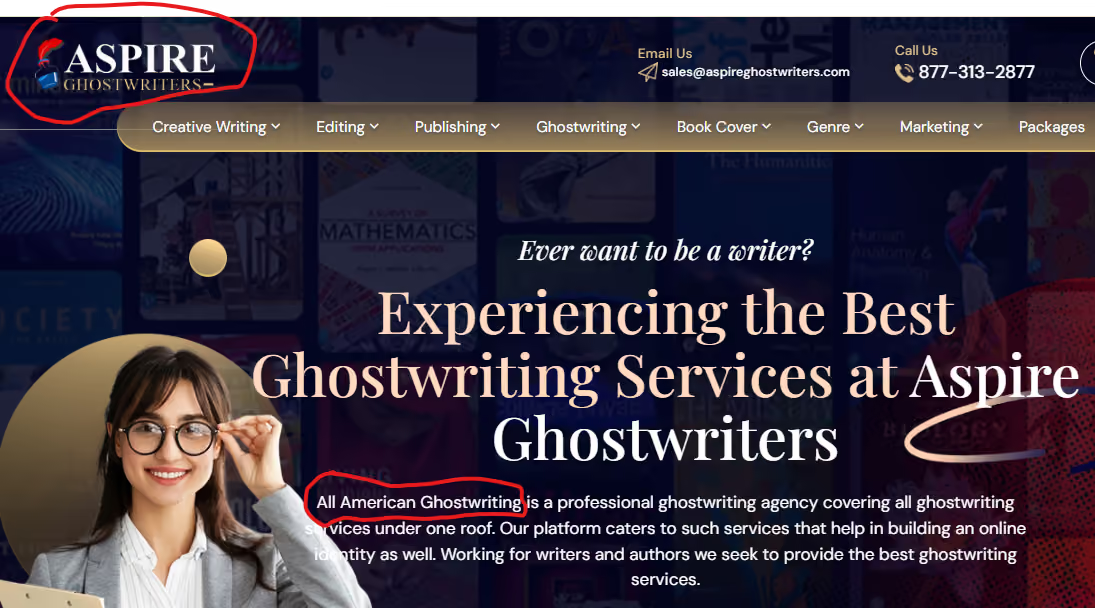
Aspire Ghostwriters or All American Ghostwriting? Which is it? They should probably figure that out before they sue me for brand defamation.
Web copy blunders like this are likely the result of haphazard re-branding efforts. These companies are trailed by poor reputations and forced to continuously reinvent themselves.
It’s sad, but these scam companies multiply like wet gremlins, all in an effort to disown their shoddy work and evade the wrath of their defrauded clients.
Case in point, the scam service doing business as “Regal Ghostwriting” probably won’t last long in its present skin. Note how they point you to their Trustpilot reviews (circled in yellow below).
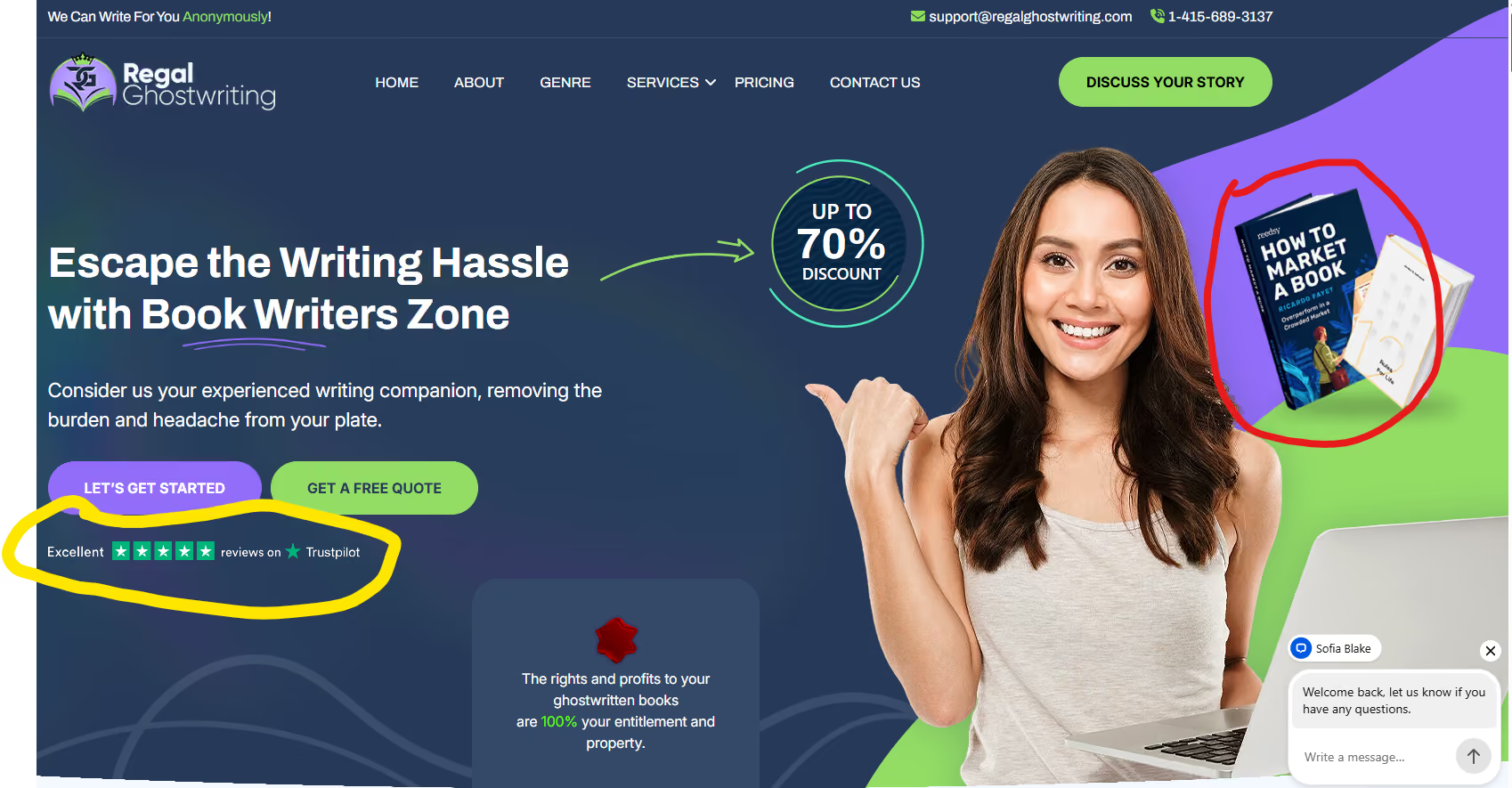
Regal Ghostwriting’s Trustpilot profile, though featured on their landing page, isn’t actually linked. It can be found on a Google search though:
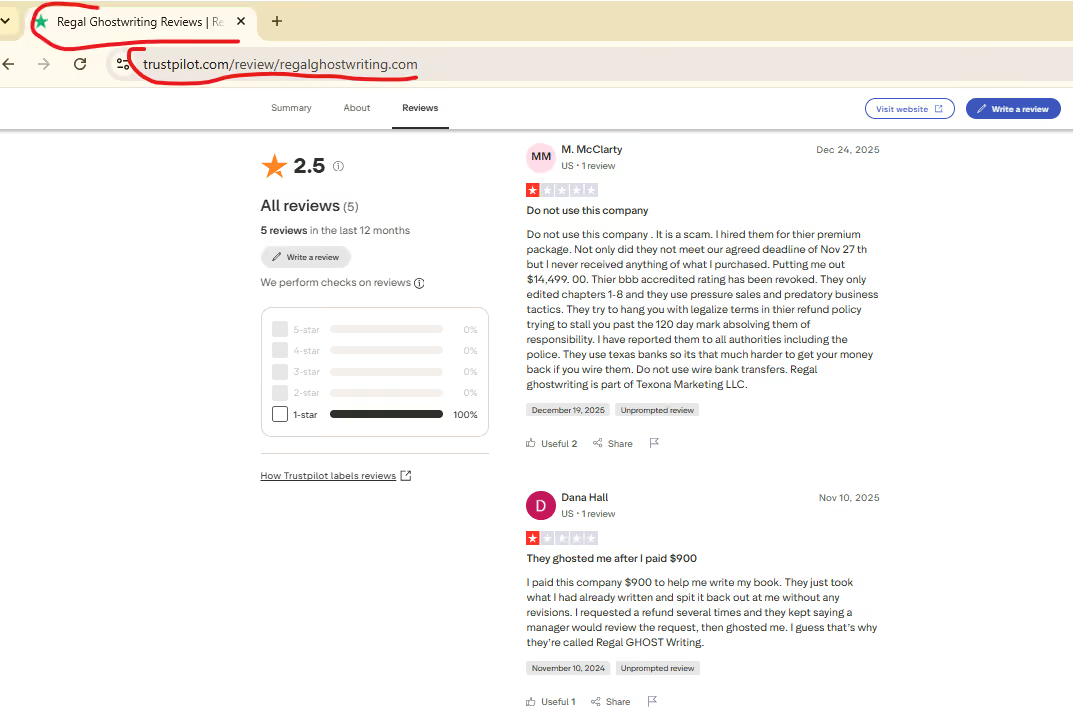
I should note here (and will address again later in this post) don’t take consumer review sites like Trustpilot to be the definitive source of truth. Many scam companies go the extra mile and find ways to manipulate their reputations on these sites.
In January of 2022, writer and blogger, Victoria Strauss published a post called “How to Spot a Ghostwriting Scam” on the WriterBeware blog. Since her post went live, scam victims have come out of the woodwork, flooding the comments section with similar stories of frustration and financial loss. I read them all. I was astonished at the sheer quantity of scam sites that are out there; far more than I initially thought. And it pains me to say it, but I’m convinced now that a large chunk of this $1.42 billion market is flowing into the pockets of thieves. These pig butchering criminals are not only draining our marketplace, but they leave clients repulsed at the notion of ever again hiring a ghostwriter. They give us all a bad name.
Always, Always, Vet Your Writers and Agents
In addition to improbable books, impossible promises, and pointless coupons, you can often smoke out a ghostwriting scam company by digging into their personnel listings. Many fraudulent companies simply don’t list their writers, editors, or other publishing support staff. Others may showcase talent with which they have no real affiliation. In her piece on scam ghostwriting services from 2024, Dr. Marcia Layton Turner, executive director of the Association of Ghostwriters, details scams in which companies claimed to be wholly owned subsidiaries of established ghostwriting agencies. Some scammers went so far as to scrape customer testimonials from legitimate service providers for use on their sham websites. They also stole and featured the writer bios of reputable ghosts.
As Dr. Layton Turner prescribes, the necessary response to bad actors in this space is extensive vetting. Most serious ghostwriters have personal websites and/or LinkedIn profiles. Reach out to them there. No writer should be hired, sight unseen.“I always suggest that author-clients ask for a quick Zoom call, which scammers rarely want to take,” Layton Turner says.
I connected with Layton Turner in March of 2026 for some follow-up commentary on the topic of scams in our industry, and she had this to say: “The scammers are active and skilled, so it can be very difficult to determine who is real.”
The websites and sales funnels of scammers are only going to get more compelling and sophisticated as AI technology improves. We can only hope that these same AI utilities may supply the general public with better means for vetting prospective service providers.
Other Ways to Protect Yourself While Shopping for a Ghostwriter
- Scrutinize Testimonials. Ghosts operate behind the scenes. Their names often do not appear on the books they wrote. This makes it awfully easy for testimonials to be fudged and fabricated. The lazier scam sites barely try to make their testimonials look legit, whereas others simply copy and paste the hard-won testimonials of others. The solution— vet the testimonials. If a ghostwriter or agency is featuring a client’s testimonial on their website, then they should have no problem at all with their former client being contacted by a prospective client.
NOTE: As Layton Turner pointed out—and as I’ve witnessed myself—some of the scam sites are now featuring video testimonials. The books themselves never appear on the screen during the testimonial, and the names of the “authors” are nowhere to be found online. As Layton Turner says, “you have to wonder if those folks were authors or paid actors.”
- Request Writing Samples. To repeat, scammers are scammers, not writers. Request their writing samples, then take what you receive and run it through anti-plagiarism detectors. Duplichecker.com is free and Grammarly has a detector as well.
- Obtain a W-9 or TIN/EIN. If you make a substantial investment in a company’s services and plan to write it off as a business expense, then the company must provide you with a W-9. Alternatively, the company should be willing to provide appropriate taxpayer information, such as a TIN (Taxpayer Identification Number) or EIN (Employer Identification Number) where required for legitimate business reporting. Any of these forms should contain the official, formal name of the root entity with which you’re doing business. If you’re involved with a bad actor running bad business through a cutout company, then obtaining this paperwork will help you clarify things quickly. And if they refuse to provide any of these documents, run.
- Ask for Referrals from Past Customers. In addition to the public testimonials on my website, I keep a private log of all my book collaborations. I give this private log to clients and encourage them to contact any and all parties with whom I’ve worked. You should seek out a similar level of transparency with your prospective ghostwriter; they should stand behind their work quality as well as their former and current professional associations.
- Consult Consumer Review Sites, but Remain Skeptical. Consumer review sites are not immune from manipulation, so be sure to take this into account when you consult outfits like Trustpilot and the Better Business Bureau. As Layton Turner says, “In some cases, those ratings are completely fake, and the link you click on does not actually take you to the real Trustpilot, Yelp, or Google ratings – they go to a made-up site that displays glowing reviews.”
One Last Layer of Protection: Pay with Credit Card or PayPal Whenever Possible
You’ve done your vetting and found the writer or writing service you’re willing to trust with your story (and your money). Great. One last thing. You’re better off paying with a credit card or PayPal where you have some buyer protections in the event things take a turn for the worse. Layton Turner shared a story with me of a client, “who was able to get the $5,000 he had paid back in full because he had used a credit card, versus a check or service like Venmo; in those cases, the money is gone!”
Be sure to keep good records and document all communications, invoices, and promised deliverables.
How to Find the Good Guys (and Gals)
Need help sourcing the perfect ghostwriter? Well, that’s kind of what I do. My agency, OneTrueLine, connects powerful ideas with elite-level book craft and offers ongoing support through every phase of the publishing journey.
Special thanks to Dr. Marcia Layton Turner for her contributions to this post and big thanks both to Marcia and Victoria Strauss for their previous contributions to this topic. Marcia’s organization, The Association of Ghostwriters, can be found here.
Bonus: There’s Pie in the Sky. Pay Up and I’ll Get You Some!
“$400 in book sales minimum per week or your money back,” was what the live agent was promising me.
To which I replied, “How do you know it’ll sell though. I haven’t told you anything about it.”
“It’s the amazon algorithm, because of our years of experience we know how it works and how to tweak it in such a way that your book will sell that much or more!”
“Wait a second,” I said, “do I keep all the money from Amazon. How much do you take?”
The scammer wrote back, “You keep it all.”
The rep waited on the line while I did the math. He’d made sure the calculation was a simple one. At $400 a week in guaranteed book sales I’d recoup my $1600 investment in less than a month!
I let 30 seconds go by before I resumed typing. “I don’t understand why are you advertising on Google and building a beautiful website for customers like me when you could just be using your knowledge of the Amazon algorithm to sell your own books about anything and keep all the money!”
This one left him stumped. It took a few seconds before he began typing again. “It’s really that we enjoy helping people and want to share our knowledge and professional expertise so that others can benefit by turning their dreams into a reality.”
How lucky could a guy get? A marketing funnel with a heart of gold!
I laid into the rep then, telling him to stop ripping people off and to find a new way to make a living. He called me on the phone later that afternoon (I’d listed my real number on their form for reasons I don’t understand) and we exchanged displeasantries. That exchange is why I finally decided to write this piece.
1 Report Prime, “Ghostwriting Services Market Size, Growth, Forecast Till 2032,” Report Prime, published April 2026, accessed June 12, 2026, https://www.reportprime.com/ghostwriting-services-r14029.